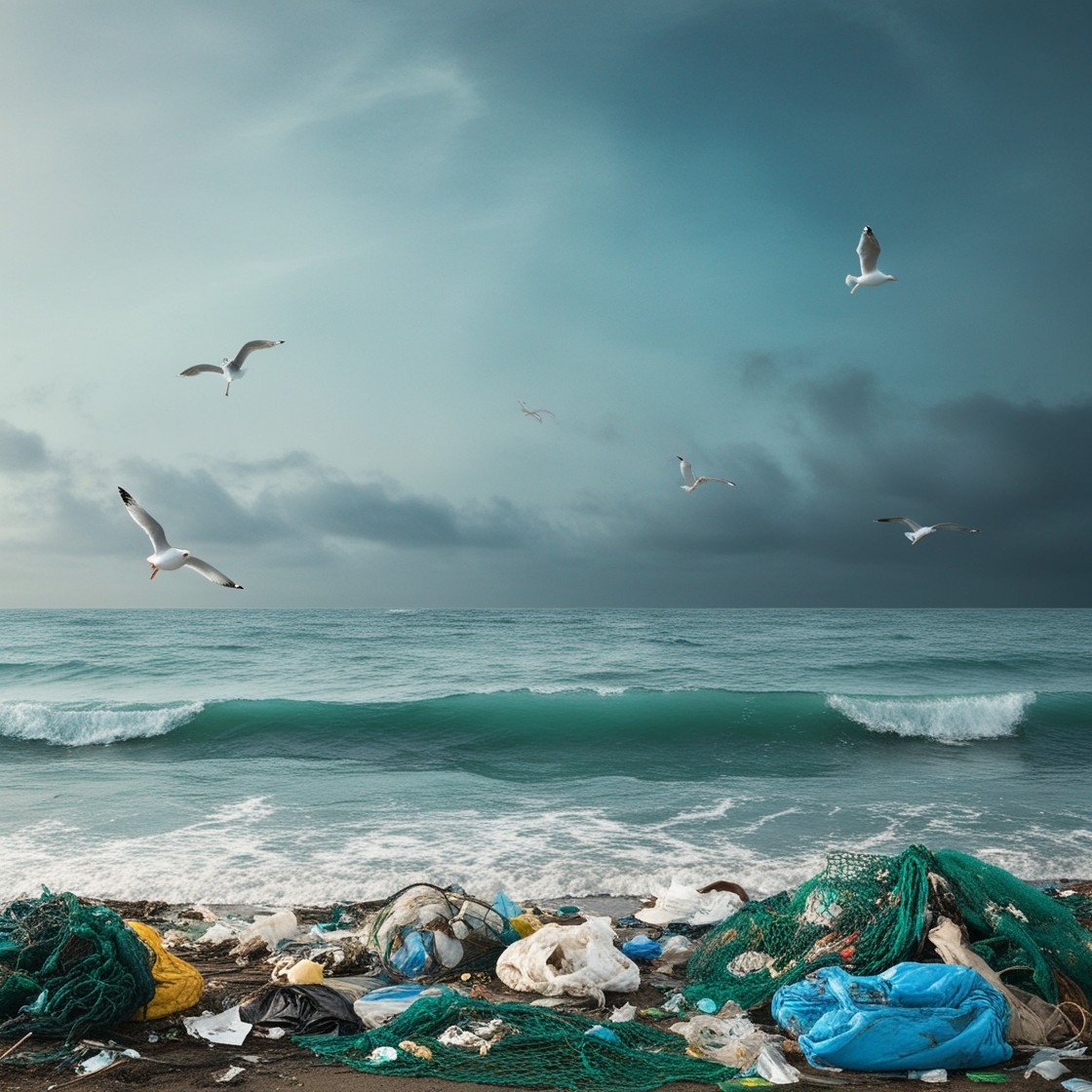
Coastal areas are amongst the most beautiful and most important ecosystems on earth, providing critical services like biodiversity conservation, carbon sequestration, and economic benefits through tourism and fisheries. Yet, these very valuable ecosystems are exposed to significant threats from human actions, especially that huge threat of marine debris. Plastic pollution stands out as one of the most destructive forms, causing intense disruption of marine habitats, endangering wildlife, and even posing risks to human health.
The Philippines is a telling example of this crisis: 2.7 million tons of plastic waste are produced annually, and 20% of that enters the ocean (World Bank, 2021). The country is identified as the most significant contributor to oceanic plastic pollution, accounting for more than one-third of the global total (Washington Post, 2023). This enormous problem needs innovative, efficient, and scalable solutions.
This solution has been the use of ocean swell and wave monitoring apps. Since these are technological tools that reveal ocean conditions in real time, cleanup teams know just where to focus their efforts most as a result of most significant impacts from marine debris. Combining this actionable insight with focused cleanup efforts revolutionizes the approach towards restoring and preserving coastlines.
Understanding What Ocean Swells Are and How They Relate to Marine Debris
Ocean swells, which are waves formed from faraway wind patterns, also contribute profoundly to the transport of marine debris. These long, rolling waves carry energy and materials in bulk distances along with plastics, wood, and other waste back to lands thousands of kilometers away (UNEP, 2021).
This global transportation network often leaves debris amassing in various coastal areas associated with dissipated wave energy, such as bays, estuaries, and sheltered inlets. These accumulation areas heighten the intensity of pollution in local ecosystems, causing major ecological and aesthetic challenges (Jambeck et al., 2015). Through monitoring swell patterns, cleanup teams can ascertain these high-impact areas, allowing effective and efficient mobilization of resources.
Features of an Ideal Ocean Swell Monitoring App for Cleanup Efforts
For an ocean swell and wave monitoring app to effectively support coastal cleanup efforts, it should include the following features:
1. Real-Time Data and Alerts
- Provide up-to-date information on wave heights, directions, and speeds to enable immediate response and decision-making.
2. Predictive Marine Debris Tracking
- Use redictive models to identify areas likely to be hit by debris, so the cleanup team can prepare beforehand and predict their operations.
3. Tide and Weather Forecasts
- Utilize tide charts and weather predictions to coordinate cleaning at best times while avoiding dangerous moments.
4. Geolocation and Mapping Tools
- Provide interactive maps to point out areas with significant debris presence, thus helping navigate and mobilize cleaning crews.
5. Features of Community Reporting
- Enable users to report on marine debris sightings to foster a community network that amplifies the success of the cleaning missions.
6. Integration with Environmental Organizations
Connect with NGOs and local governments to streamline operations, data sharing, and coordinating large-scale cleanup drives.
7. Long-Term Data Analytics
It offers tools that have historical wave pattern data and debris movement information for supporting research and waste management policies.
Advantages of Ocean Swell Monitoring Apps
With such features, ocean swell and wave monitoring apps provide the following key benefits:
- Efficiency: Targeted operations minimize wasted resources with maximum cleanup efforts
- Safety: Real-time alerts and predictive data prevent hazardous conditions
- Proactive Cleanup Planning: Seasonal trends can be monitored in order to schedule cleanups in advance.
It addresses the root causes of marine pollution through proper policymaking, hence supported through data. Shared data will bring partnerships across regions and borders towards combating pollution as a whole.
One of the emerging crises threatening the health of our oceans and coastal communities is marine debris, particularly plastics. For this challenge, innovative solutions are needed; innovative solutions like ocean swell and wave monitoring apps that can empower cleanup teams with real-time data and predictive analytics to act with precision in safer and more effective ways.
An ideal application does much more than just satisfy the urgent need to clean debris from the oceans; it can also create a long-term sense of environmental friendly by promoting teamwork and providing valuable information towards the decision-making process of policies. These innovations would therefore help our generations manage to preserve much beauty and vitality that has gone to the ocean.
References
1. World Bank (2021). Market Study for Philippines Plastics Circularity Opportunities and Barriers Report. Retrieved from [https://www.worldbank.org/en/country/philippines/publication/market-study-for-philippines-plastics-circularity-opportunities-and-barriers-report-landing-page](https://www.worldbank.org/en/country/philippines/publication/market-study-for-philippines-plastics-circularity-opportunities-and-barriers-report-landing-page).
2. Washington Post (2023). Philippines city swallowed by plastic waste. Retrieved from [https://www.washingtonpost.com/photography/interactive/2023/philippines-city-swallowed-by-plastic-waste](https://www.washingtonpost.com/photography/interactive/2023/philippines-city-swallowed-by-plastic-waste).
3. United Nations Environment Programme (UNEP) (2021). State of Oceans and Coasts Report. Retrieved from [https://www.unep.org/resources/report/state-oceans-and-coasts-2021](https://www.unep.org/resources/report/state-oceans-and-coasts-2021).
4. Jambeck, J. R., et al. (2015). Plastic waste inputs from land into the ocean. Science, 347(6223), 768–771. Retrieved from [https://science.sciencemag.org/content/347/6223/768](https://science.sciencemag.org/content/347/6223/768).

Categories
Recent posts

Smart Farming in Davao del Sur: The Role ...
19 Nov 2024
Secride is Open for Business Partner in ...
27 Nov 2024
Data Analytics and LLM AI: Leveraging ...
27 Nov 2024